
March 17, 2026
Hitch pins and hitch locks may be small components, but they play a major role in keeping your towing and cargo setup secure.
Whether you’re hauling a trailer, carrying bikes, or using a cargo carrier, the right hitch pin or lock ensures your equipment stays firmly attached—and protected from theft.
Choosing the correct option involves more than grabbing the first pin that fits.
Understanding your hitch, usage habits, and security needs will help you make a smart, reliable choice.
This guide explains how hitch pins and locks work, the different types available, and what to consider when selecting the right one for your vehicle.
The Purpose of a Hitch Pin or Lock
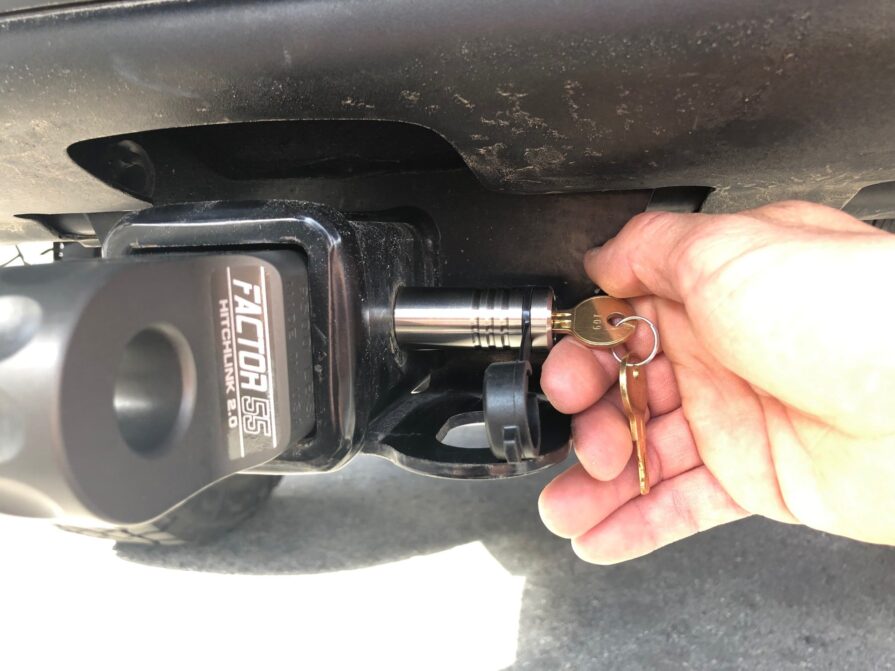
A hitch pin passes through aligned holes in the hitch receiver and the accessory shank, preventing the accessory from sliding out.
A basic hitch pin simply secures the connection, while a hitch lock adds a locking mechanism to prevent unauthorized removal.
If you regularly use trailer hitch accessories such as bike racks, cargo carriers, or towing equipment, the hitch pin is what physically keeps everything in place.
Without the proper pin or lock, even a perfectly fitted accessory can become unsafe or vulnerable to theft.
Hitch Pin Sizes and Compatibility
The first step in choosing the right hitch pin or lock is matching it to your receiver size.
Hitch pins are not universal.
Common hitch receiver sizes include:
- 1¼-inch receivers
- 2-inch receivers
- 2½-inch and 3-inch receivers
Each receiver size requires a corresponding pin diameter and usable length.
Using the wrong size can result in excess movement, reduced stability, or an insecure fit.
Always confirm your hitch receiver size before purchasing a pin or lock.
Basic Hitch Pins vs. Locking Hitch Pins
Standard Hitch Pins
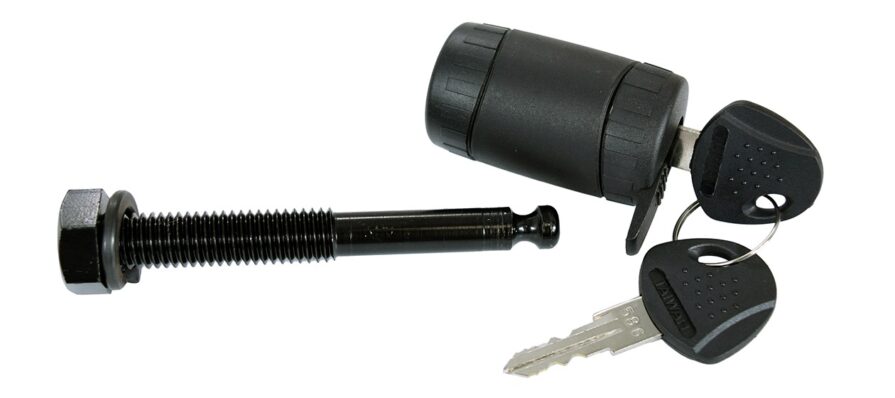
Standard hitch pins usually consist of a solid metal rod with a clip or cotter pin to hold it in place.
They are easy to use, quick to install, and inexpensive.
Best for:
- Short-term use
- Controlled environments
- Situations where theft risk is low
However, standard pins offer no theft protection. Anyone can remove the clip and slide the pin out within seconds.
Locking Hitch Pins
Locking hitch pins include a built-in lock that requires a key to remove.
They provide both retention and security, making them a popular choice for everyday use.
Best for:
- Urban areas
- Public parking
- Frequent use of hitch-mounted gear
For people who leave trailer hitch accessories installed on their vehicle regularly, a locking pin adds peace of mind with minimal extra effort.
Types of Hitch Locks
Not all hitch locks secure accessories in the same way. The design of the lock affects how easy it is to use, how well it resists tampering, and how suitable it is for different hitch-mounted equipment.
Understanding the most common lock styles helps you choose one that fits both your receiver and your day-to-day usage, without adding unnecessary complexity.
Barbell-Style Locks
Barbell-style hitch locks replace a traditional pin with a solid locking bar that secures on one end using a cap or locking head.
This design keeps the lock compact and low-profile, which is why it is commonly used for cargo carriers, bike racks, and lighter hitch accessories.
The barbell shape limits exposed parts, making it harder to pry or twist compared to basic clip-style pins.
These locks are quick to install and remove while still offering a noticeable upgrade in security for frequently used accessories.
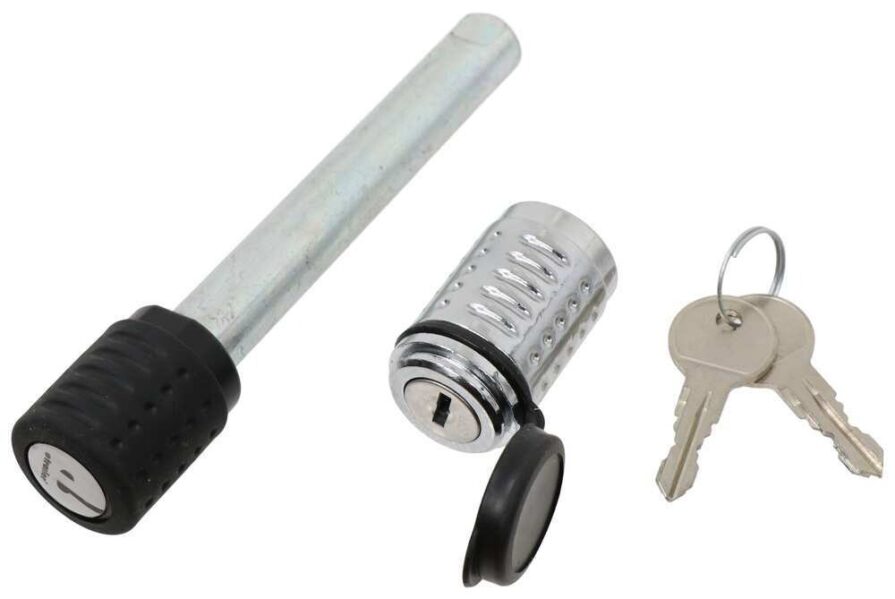
Pin-and-Tumbler Locks
Pin-and-tumbler hitch locks look similar to standard hitch pins but include a built-in keyed cylinder on one end.
They slide through the receiver and accessory just like a regular pin, then lock in place with a turn of the key.
This familiar design makes them widely compatible across different hitch setups and easy for most users to operate.
They are a popular all-around choice for people who want reliable theft deterrence without changing how their hitch accessories install or function.
Integrated Accessory Locks
Some hitch-mounted accessories come with their own integrated locking mechanisms built directly into the shank or mounting system.
These can be convenient since they eliminate the need for a separate lock, but they should still be evaluated carefully.
Receiver compatibility, lock strength, and weather resistance vary between manufacturers.
Even with an integrated lock, it is important to confirm that it provides adequate security for your environment and the value of the equipment you are protecting.
Security Considerations
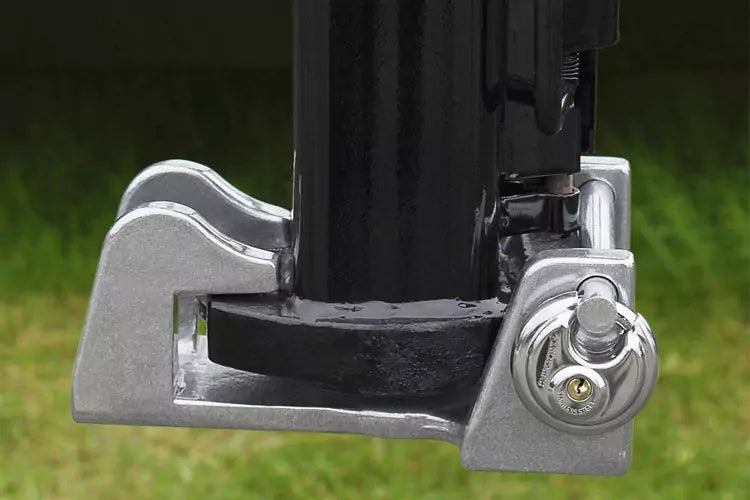
Security needs vary depending on where you drive, how often you use hitch-mounted accessories, and how comfortable you are leaving equipment attached to your vehicle.
A hitch pin or lock should match your real-world habits, not just the accessory itself.
Thinking through a few key factors helps avoid under-protecting valuable gear or overcomplicating everyday use.
Theft Risk
Consider where and how often you park your vehicle.
If you frequently park in public areas or leave accessories installed overnight, a locking hitch pin is strongly recommended.
Accessory Value
Higher-value items like bike racks or specialized carriers are more attractive theft targets.
Investing in a quality lock is a small cost compared to replacing stolen equipment.
Ease of Removal
Locks add security, but they also add a step when removing accessories.
If you frequently install and remove equipment, look for locks that balance convenience with protection.
Material and Build Quality
Not all hitch pins and locks are built the same. Look for:
- Hardened or corrosion-resistant steel
- Weather-resistant lock cylinders
- Protective caps to keep dirt and moisture out
Since hitch components are exposed to road debris and weather, durability is critical for long-term reliability.
Reducing Rattle and Improving Stability
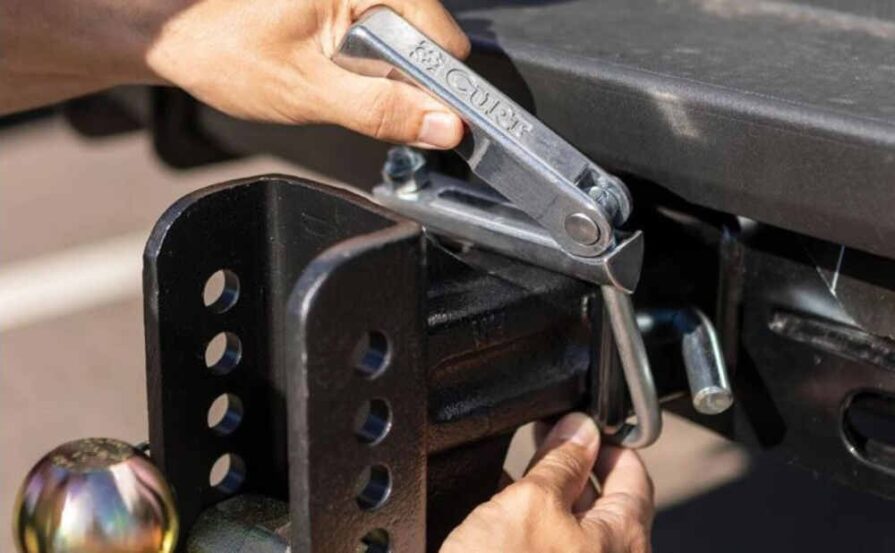
Some hitch locks are designed to do more than just provide security.
Certain models help reduce movement between the receiver and accessory, minimizing noise and vibration.
This can be especially useful when using trailer hitch accessories that extend outward, such as cargo carriers or steps.
A more stable connection improves driving comfort and reduces wear over time.
Single-Key vs. Multiple-Key Systems
If you use multiple hitch-mounted items, consider whether you want:
- One lock for each accessory
- A single key system that works across multiple locks
Using one key can simplify access, especially during trips where you frequently adjust or remove gear.
Common Mistakes to Avoid
Even simple towing setups can become unsafe when small details are overlooked.
Hitch pins and locks are often treated as interchangeable parts, which leads to poor fit, unnecessary wear, or a false sense of security.
Avoiding a few common mistakes helps ensure that your hitch connection remains stable, secure, and reliable over time, especially when equipment is exposed to weather, vibration, and regular use.
- Choosing a pin based on appearance rather than size
- Assuming all locks provide the same level of security
- Ignoring corrosion resistance
- Using a lock to compensate for improper fit or overloaded accessories
A hitch pin or lock enhances safety and security but does not replace proper installation or adherence to weight limits.
Final Thoughts
Choosing the right hitch pin or lock for security comes down to compatibility, usage, and environment.
Standard pins may be sufficient for occasional towing, but locking pins provide valuable protection for daily drivers and frequent travelers.
When selected carefully, the right option keeps your setup secure, stable, and worry-free.
If you regularly rely on trailer hitch accessories, investing in a quality hitch pin or lock is a simple yet effective way to protect your equipment and enjoy greater confidence on the road.