
July 13, 2026
America’s attachment to SUVs continues to grow to the point where several American automakers have almost abandoned traditional passenger cars in their lineups, leaving SUVs to meet any needs not covered by pickup trucks. Of course, this is partly because the definition of an SUV has become rather vague. Must an SUV have body-on-frame construction? Not anymore. Must it have all-wheel drive? Not necessarily.
Whatever the situation today, the spiritual origins of the modern American SUV are less ambiguous. Here are some of the greatest, coolest, and most notable vehicles in the history of the American automotive industry.
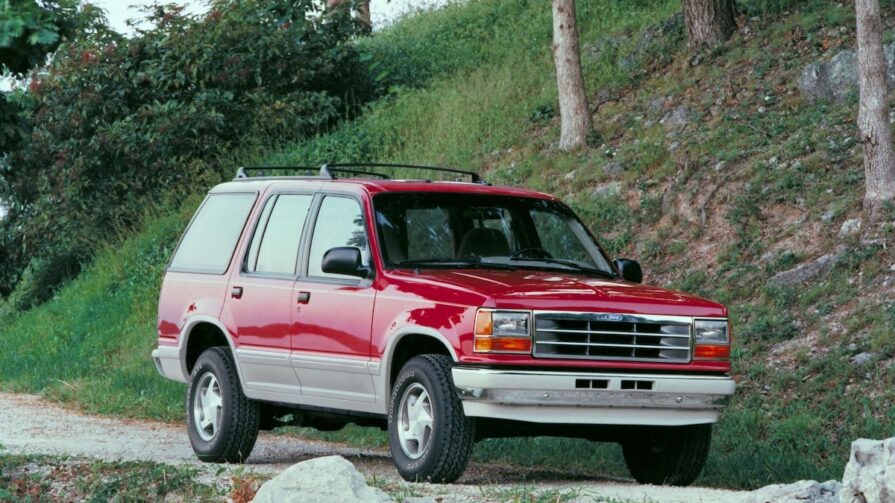
Ford Explorer
Initially based on the compact Ranger pickup, the Ford Explorer SUV debuted for the 1991 model year as a rugged mid-size SUV that quickly gained attention, proving popular enough to survive a scandal involving tire tread separation and rollover risks a few years later.
Now in its sixth generation, the Explorer remains a cornerstone of the Ford lineup at dealerships like Indy Auto Man in Indiana and an icon in SUV history.
Chevrolet Suburban
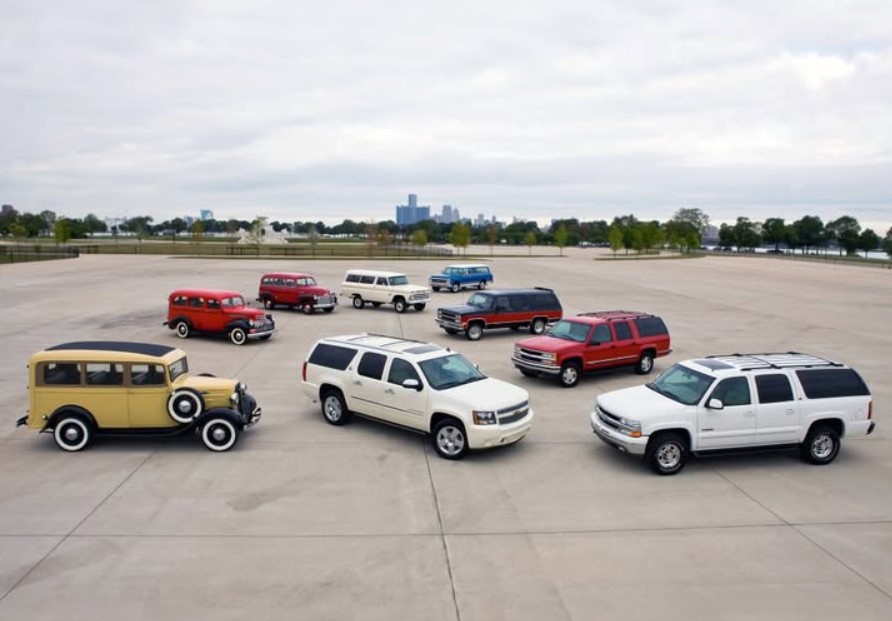
At a time when the concept of suburbia was still relatively new, a number of vehicles used names related to the suburbs to signal their purpose – namely, to facilitate travel between city centers and their outskirts. Ultimately, however, it was the Chevy Suburban that outlasted them all. In continuous production since 1934, the Chevy Suburban has become the longest-running model in the world.
Evolving through 12 successive generations from that initial basic formula – a van-like body on a pickup truck chassis – the Chevy Suburban model has transformed into an undisputed icon with a luxurious and spacious interior, and a definitive benchmark for this type of vehicle.
Bantam BRC/Ford GPW/Willys-Overland MB – The Original Jeep
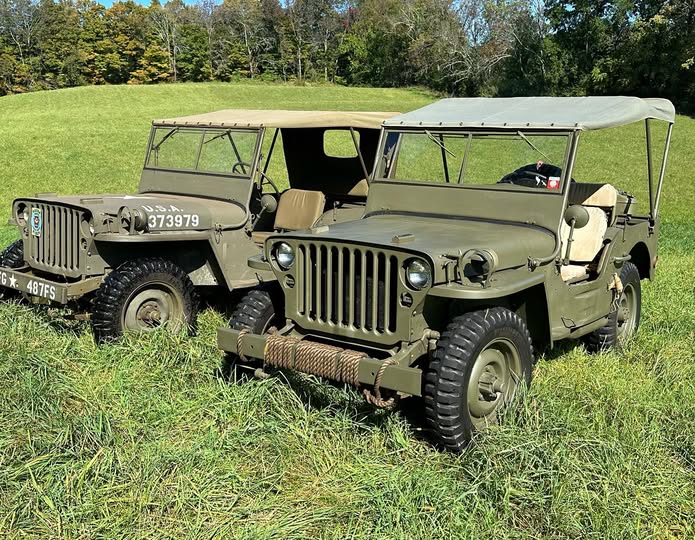
Form followed function with this now-legendary vehicle, created to provide the army with an easily manufactured, rugged, all-terrain field vehicle. Developed by Bantam and produced under government contract as the Ford GPW and Willys-Overland MB, more than 600,000 units were built by the end of World War II.
Later, the basic profile and layout were carried over to civilian Jeep (CJ) models and subsequently to the Jeep Wrangler, which continues the Jeep tradition well into the 21st century.
Chevrolet K5 Blazer/GMC Jimmy
Striving to keep the pace, GM introduced the K5 Blazer. Based on a shortened version of the C/K Series pickup platform, these SUVs proved highly successful, spanning three generations and even sharing their names with a separate line of compact SUVs based on the Chevy S-10 and GMC S-15 pickups, before eventually being renamed the GMC Yukon and Chevy Tahoe.
GM revived the Blazer name in 2019 for a new line of mid-size SUVs. Although the latest Blazer doesn’t quite live up to the rugged standards of its predecessors, there are rumors that GMC might soon bring back the Jimmy as a full-fledged SUV.
Jeep Wagoneer and Cherokee
In some respects, the Jeep Wagoneer, introduced for the 1963 model year, represents the platonic ideal of an SUV; it was a full-size, four-wheel-drive vehicle capable of both off-road adventure and station-wagon-like utility. While not as widely known today, the Wagoneer’s influence on the burgeoning SUV market can hardly be overstated.
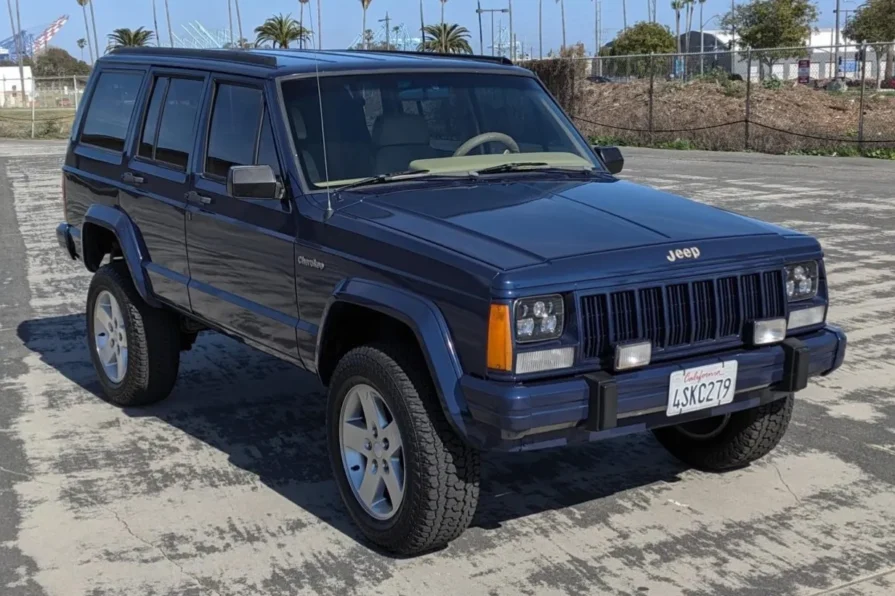
The Cherokee – the first two-door version of the large Jeep and the first vehicle to be marketed as a “Sport Utility Vehicle” – arrived in 1975, but the nameplate only truly gained prominence with the launch of the new vehicle that would carry on its legacy. Or, more accurately, two new vehicles.
The new, and, crucially, unibody Cherokee, which debuted for the 1984 model year, was such a hit that when the time came to replace the aging full-size Wagoneer, Jeep decided to capitalize on the smaller model’s newfound popularity. Thus, the Grand Cherokee arrived in 1993, achieving even greater success.
Hummer H2
The Hummer traces its roots to the AM General High Mobility Multipurpose Wheeled Vehicle – the HMMWV, or “Humvee.” The Hummer brand was developed by General Motors, which acquired the name in 1999; it sold both the AM General-produced H1 and its own H2, which was designed in-house using an existing 3/4-ton pickup truck architecture. A smaller model, the H3, joined the lineup in 2006, but by then the brand had become a symbol of excess and social irresponsibility in the public eye, and GM was facing financial difficulties. The Hummer brand was shelved during GM’s 2009 bankruptcy.
However, the name was revived with the GMC Hummer EV, which debuted for the 2022 model year as a fittingly excessive mega-machine featuring four-wheel steering, an available 1,000-horsepower tri-motor powertrain, and a curb weight of nearly 5 tons.
Cadillac Escalade
The turn of the century was a turbulent time, and at the opposite end of GM’s vast SUV spectrum from the Hummer sat the Cadillac Escalade. Introduced for the 1999 model year as a rapid response to the success of the Lincoln Navigator, it was built on the GMT400 platform, which underpinned virtually all of GM’s full-size trucks and SUVs at the time. Yet none were as luxurious as the colossal Caddy; embraced by famous actors and musicians, it soon became a pop-culture icon in its own right.
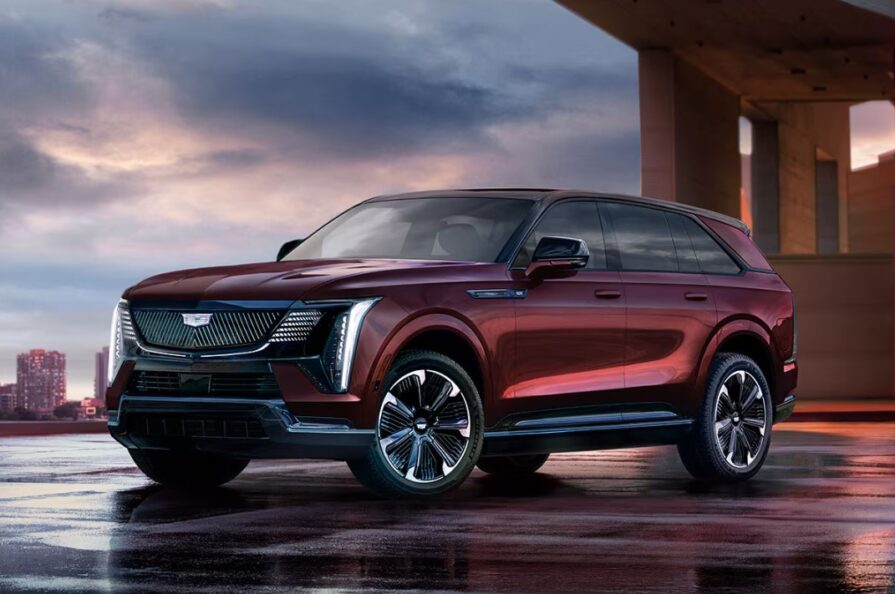
The Escalade lineup eventually expanded to include hybrid and, by 2025, battery-electric powertrains; the Escalade iQ EV, built on GM’s Ultium electric vehicle platform, was named MotorTrend’s SUV of the Year for 2026.
Tesla Model Y
And now it’s time for something completely different. Like it or not, the significance of Tesla’s electric SUV is undeniable. For several consecutive years, the Model Y has been the best-selling electric vehicle in the U.S., and, according to Tesla’s figures, at least, it is the best-selling vehicle in the world, with over 4 million units sold since its debut in the 2020 model year.
That is no small feat for any vehicle, but especially for an all-electric one. This can be partly attributed to the quality of the charging network and the Tesla app, as well as the fact that Tesla was the first to enter the market – at least in the minds of many buyers.